Artist Residencies
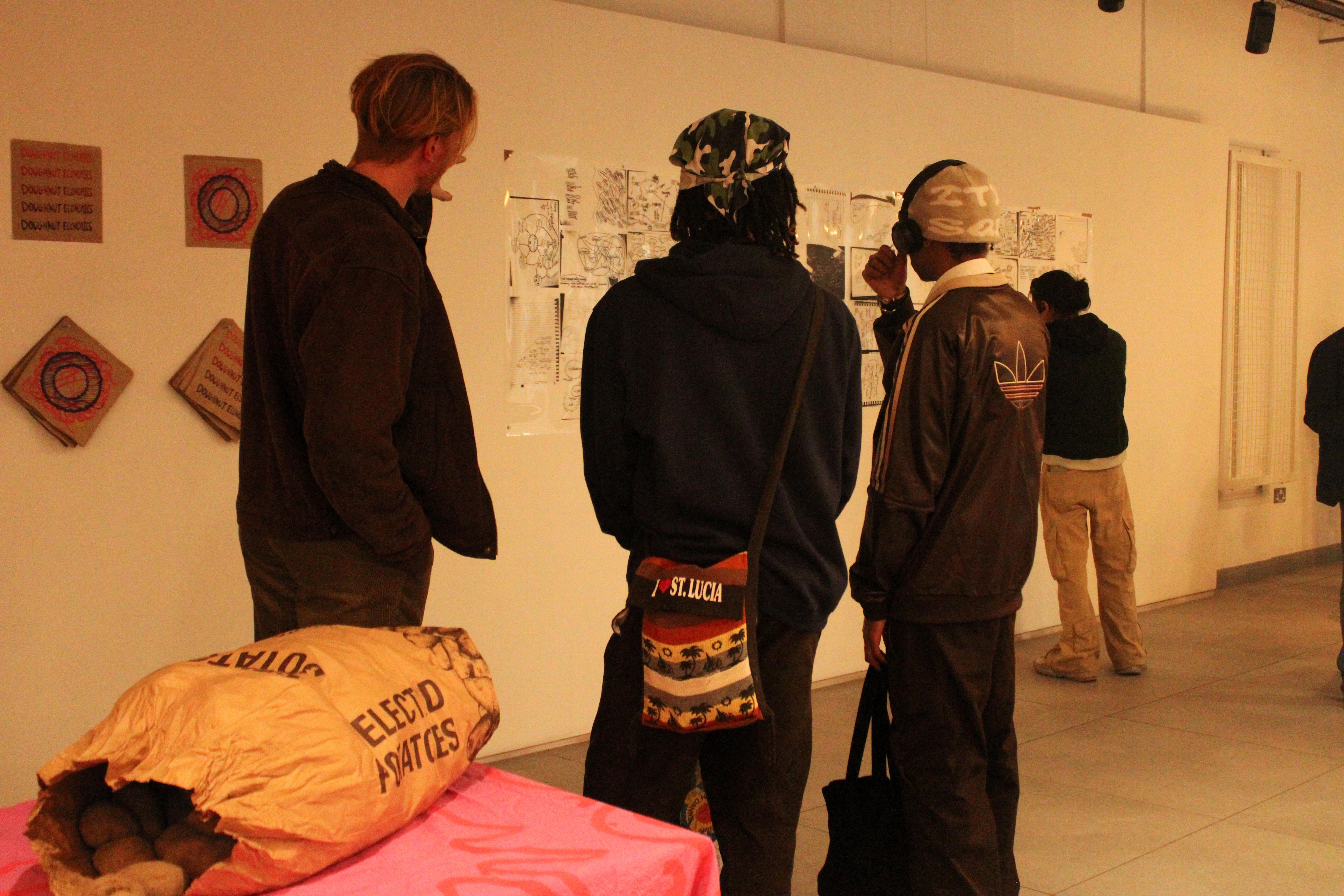
Blast! Residency exhibition, 2023 © Charlene Haylett
Sarah Byrne, Dale Hipkiss, Shannel James, Quennie Lim and Zara Masood.
Produced in partnership between Multistory and The Wolverhampton School of Art as part of Multistory’s artist development programme, the residency supports five emerging Black Country based artists each year with time, space, funding and critical mentorship. The artists’ presence activates the building as a site of exchange between students and the professional art world; opening access to the school's specialist facilities to the wider arts community, while contributing to a multidisciplinary culture of shared learning.
The programme culminates with the sharing of their work in an exhibition in the Wolverhampton School of Art’s foyer space, which is programmed to coincide with the yearly degree show. Rather than presenting work in its final state, the exhibition shares work in progress, reflecting the programme’s commitment to supporting practice as research, and providing space for artistic experimentation and play.
Sarah Byrne
Sarah Byrne uses heritage crafts as a method of creating connection, celebrating relationships, and holding space for reflection. Researching the historical parallel that textiles and crafts have to grief and recovery, she questions the role that these domestic acts of care have within a contemporary art practice. While in residence, Sarah spent time reflecting on the 10-year relationship she had with the Wolverhampton School of Art. Comparing her relationship with the building to a human friendship, she began a process of personifying the building while creating and gifting it its own yarn artwork. The colours chosen were selected in conversation with studio visitors during the residency period, and the resulting yarn forms a love letter which is not just reflective of her relationship with this building, but all the friendships formed here.
Dale Hipkiss
Good Food Should Be A Lot Cheaper Than It Is Now! For his residency, Dale set up a small shop in the residency studio, handing out food in exchange for peoples thoughts on the economy and a constructive conversation about how things can be made better. Students mapped how they spent their time and contemplated what they value. Subsidising food at the point of sale is just one of those ideas that would instantly improve people's lives! The “free market” is really bad at looking after the physical, emotional and mental health of the vast majority of people. Wealth accumulation helps very few and is awful at discerning where resources should be distributed. Subsidising food at the point of sale is just one way to redistribute wealth. To not do so is a political choice. Doughnut Economics describes letting go of growth as the indicator for a healthy economy and proposes that an economy should be judged healthy if it meets the needs of its people without eroding the environment. Brown paper bags which were used to distribute food have been used to promote this economic theory and were presented in the exhibition to distribute potatoes.
Shannel James
Shannel’s new work ‘Unravelled Mind: Threads of Dissociation’ combines elements of mental health challenges and their impact on individuals. The word 'unravelled' suggests a sense of disconnection or fragmentation, reflecting the concept of dissociation which is often associated with mental health challenges. It symbolises the unravelling of thoughts and emotions, and experiences that might occur when facing such challenges. The medium used in the installation is a mixture of restoration and textiles. Restoration techniques are employed to preserve and protect the structurally sound elements of the piece, while textiles are utilised to add depth and visual interest. This residency has been a canvas for my creativity, allowing me to fully engage with the resources available, particularly the rich array of equipment in the textiles department.
Quennie Lim
During her residency, Quennie explored archives kept in family albums within the Filipino West Bromwich community, looking into the relationships and spaces of care that are created within them. She conversed across generations in a range of dinner gatherings and celebrations to find out how distant families build, restore, and preserve kinship, as well as discussed her own personal experience migrating from the Philippines to the UK. Her installation Balikbayan shared photographs from her personal family archive alongside a Balikbayan box filled with food and gifts. Quennie’s practice explores archiving as an act of resistance; the artist seeks to address a lack of representation for the Sandwell Filipino diaspora within local archives, with the residency acting as a test-bed for a new long-term oral history project that holds space for the stories of the women in her community. The photographs in the installation were printed on printer paper and marked with the artist’s fingerprints, speaking to the everyday of connecting internationally, and to the intimacies of the work.
Zara Masood
FEAST ON ME is a new textile work informed by an exploration of the duality of the artist’s British and Pakistani identity, the relationship between coloniser and colonised and what that means in relation to her and how she makes work. During her residency, Zara held a series of participatory workshops where students of The Wolverhampton School of Art were invited to make work and respond to the legacies of the BLK Art Group. FEAST ON ME interrogates the legacies of colonialism and questions the expectations often placed on artists of colour to share their experiences of trauma for white audiences; the artist chose to position the artwork so that the public is met with the back of the work as they enter the gallery space.
Artist Biographies
Sarah Byrne I am a West-Midlands based artist working with textile and print-based responses to family photography. My current research positions traditional wool-craft within a contemporary art practice, and aligns the slow processes of craft-making with its historical connection to recovery and comfort. I was taught to crochet in the months following the loss of my dad, and later, when I found myself entirely fixated on this new hobby, I slowly realised the connection between those two life events. Learning of craft’s rich history, and the many instances where its tactile comfort had formed a parallel to loss, felt particularly poignant after discovering this connection first hand. This research encouraged me to introduce textiles to my practice for the first time. Prior to this, my practice formed an autobiographical exploration of photographs from my childhood. Today I continue to be led by family snapshots, however with my practice now in dialogue with my father. As I learn and develop new skills in spinning, weaving, and dyeing, I position the resulting materials in response to my dad’s photographs, previously unseen and discovered posthumously. Dad’s photograph’s guide my process. Connections are created through colour, space for memory and narrative is carved out, and my connection to our relationship is maintained.
Dale Hipkiss grew up in Tipton. Wasn’t sure what to do with his life (understandable at 18). Worked on a farm when he was 19. Realised he hated how isolated he was. Went to Art school at 21, also worked on small holdings over the summer holidays. Arts education has combined with his need to study the environment first hand. Dale now works as one part of Hipkiss and Graney, based in south Birmingham, delivering art projects and events centred around community and ecology. His allotment allows him the space to explore a working connection to land. Dale grows wheat further afield and uses it as a method to reasearch the wider implications of farming. People from the Black country during its industrial past would take working holidays to hop farms over the summer with their families. He sees parallels with his own history and need to connect to land. The narratives around farming must shift dramatically if we are to have a resilient food network in the coming years, this will affect our identity and the stories we tell about the land.
Shannel James My creative practice combines sustainable craft, cultural fusion, and storytelling to explore the heritage of British vintage furniture and traditional African textiles. Through restoration and textiles, I breathe life into forgotten tales to explore contrasting cultures, identity, representation, difference, diversity, empathy and depth of human experience. Initially I had been exploring restoration, textiles and storytelling as separate disciplines, but since the start of 2023 I’ve been blending the three together creating unique pieces for a number of exhibitions. This has allowed me to develop the concept of a restoration/textile’s hybrid, used as a platform to convey stories through poetry in meaningful ways with integrity and compassion. I’m still at the early stages of developing my artistic practice, however I’ve found consciousness, connection and purpose within this new way of working and would love to develop it further with this opportunity and try to reach new audiences to continue these very important conversations around shared heritage and representation.
Quennie Lim I was born in the Philippines. Moved to West Bromwich, England. Primary School in West Bromwich. Secondary School in Wednesbury. Sixth Form in Wednesbury. University in London. Love for the arts – out of the institution. For the most part. Starting University in London was the catalyst for me opening up to Art in its different capacities from going in and out of different spaces.I saw that the white walls can be filled to its very brim with so much colour but yet I question its capacity to reflect and champion the vastness that is held in real life. I chose to explore photography for the first time. I chose to understand the relationship between my body and movement for the first time. London was the city where I had experienced many of my firsts as an artist. Through listening, seeing, experiencing what is shown. I began to navigate my identity and the lens I have of my surroundings, their relation to each other and my relation to them in wider capacities. I thank the Global Majority Artists and Academics that have influenced my interest in exploring my identity, migration, and relationships. Graduated. I’m back home. West Bromwich.
Zara Masood is a British-Pakistani artist and writer based in the West Midlands. Their practice draws from lived experience creating links between the personal as political. It explores the themes of identity, South Asian diaspora and second generation-ness. They draw on theories of hybridity and the ‘Third Space’ to investigate Otherness and belonging. Zara’s works with writing, food and material to play with these themes and create space for introspective dialogue about identity.
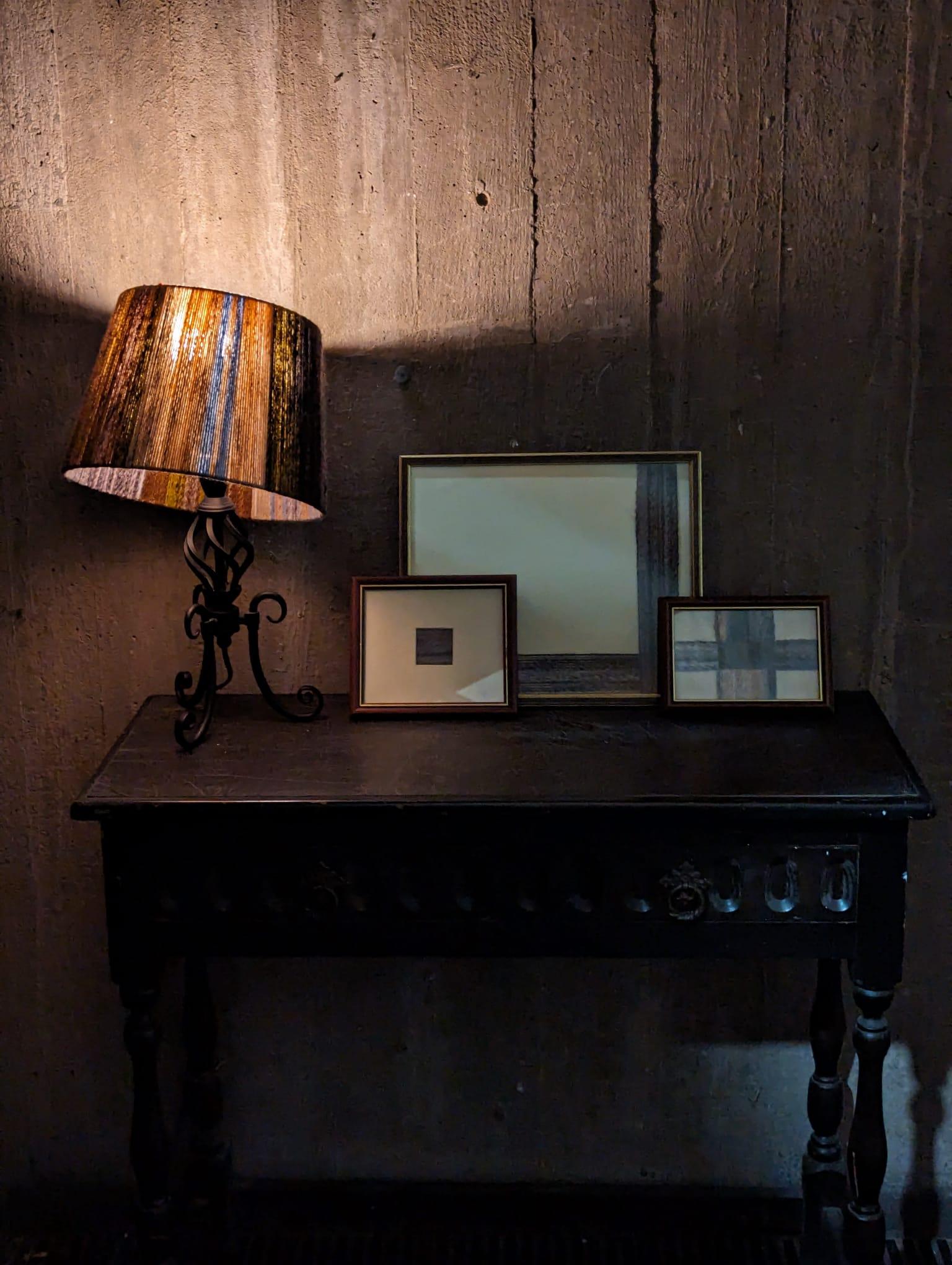
My Dear Art School, 2023. Sarah Byrne.
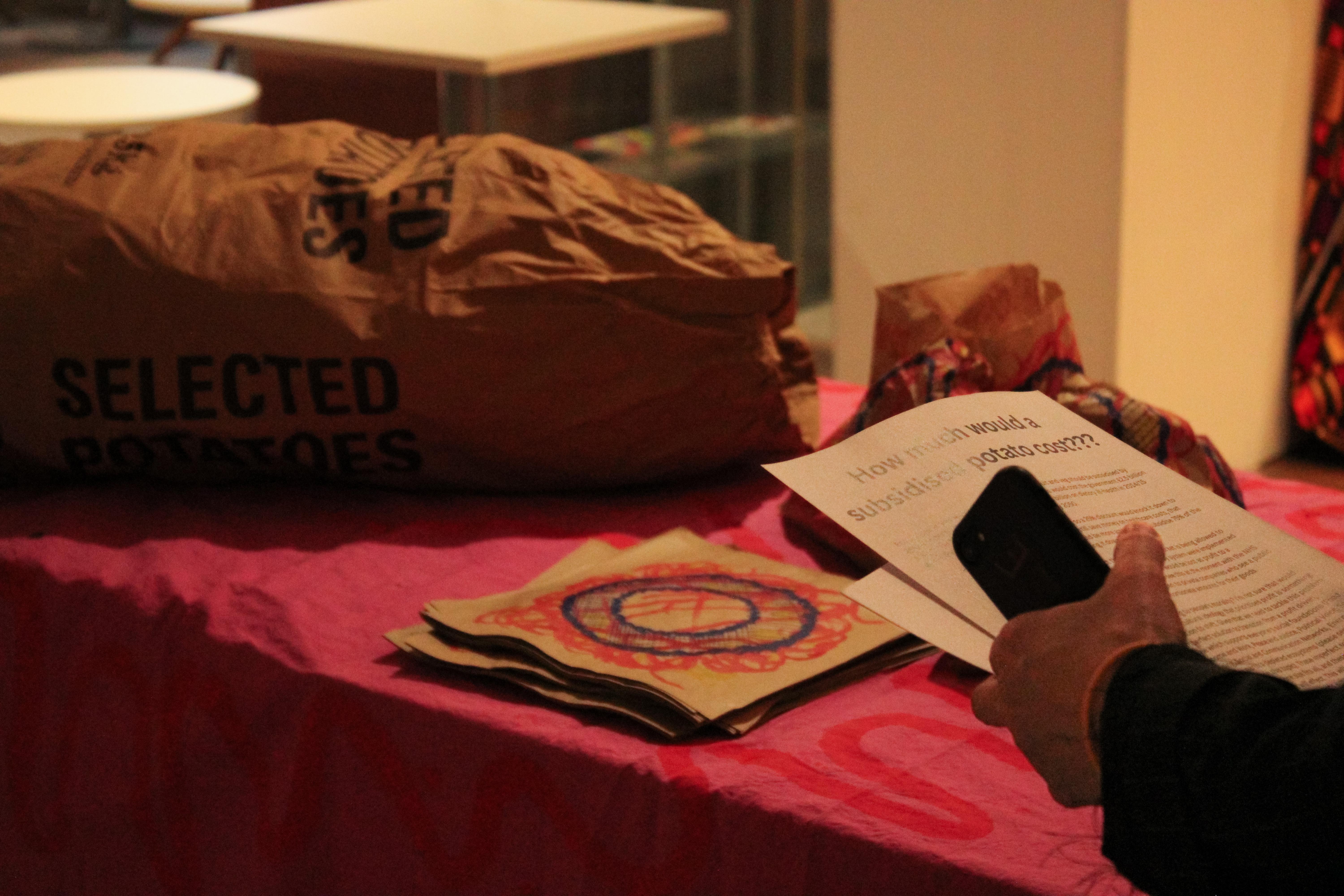
Good Food Should Be A Lot Cheaper Than It Is Now! 2023, Dale Hipkiss. Blast! residency programme exhibition © Charlene Haylett
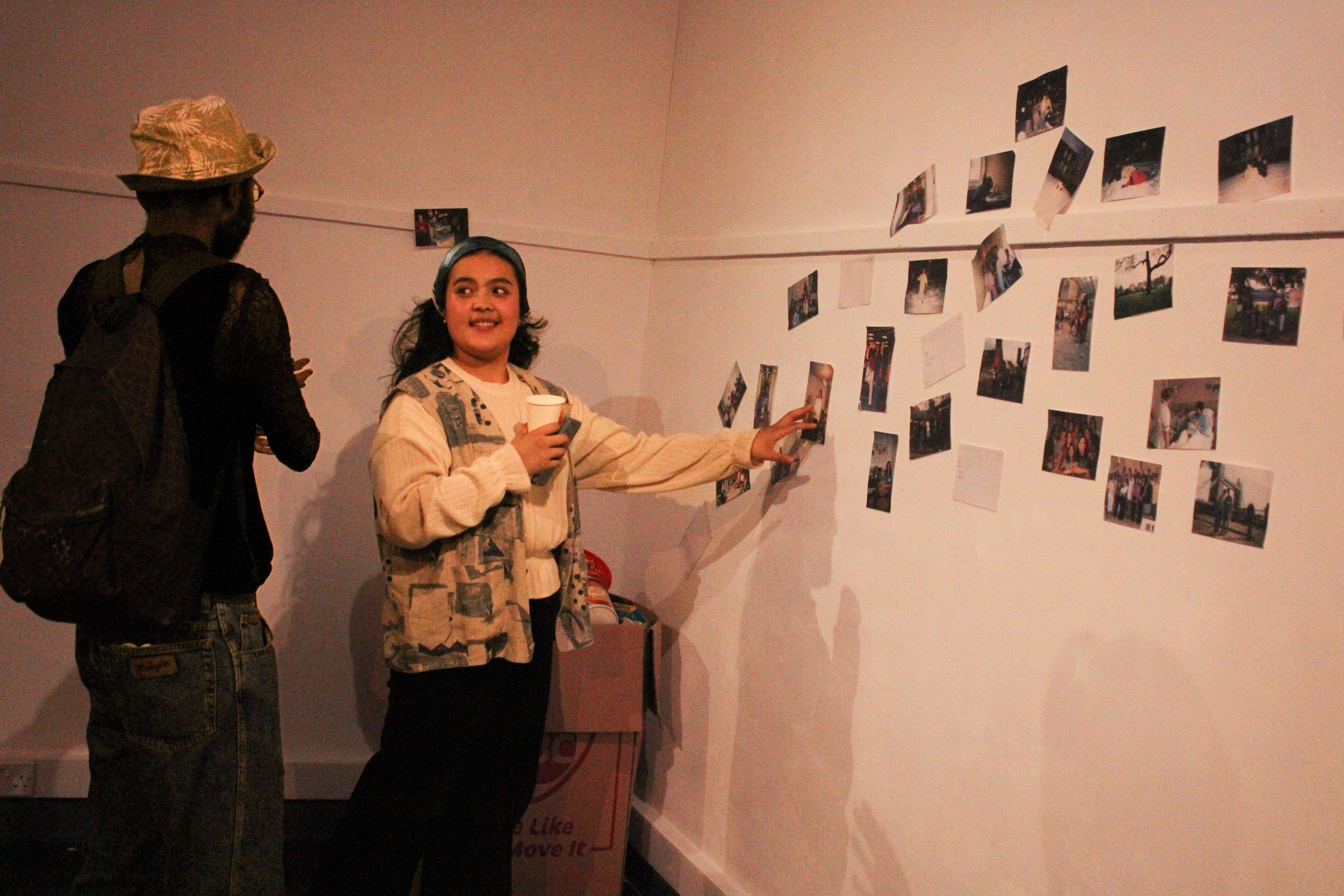
Balikbayan, Quennie Lim, 2023. Blast! residency programme exhibition © Charlene Haylett
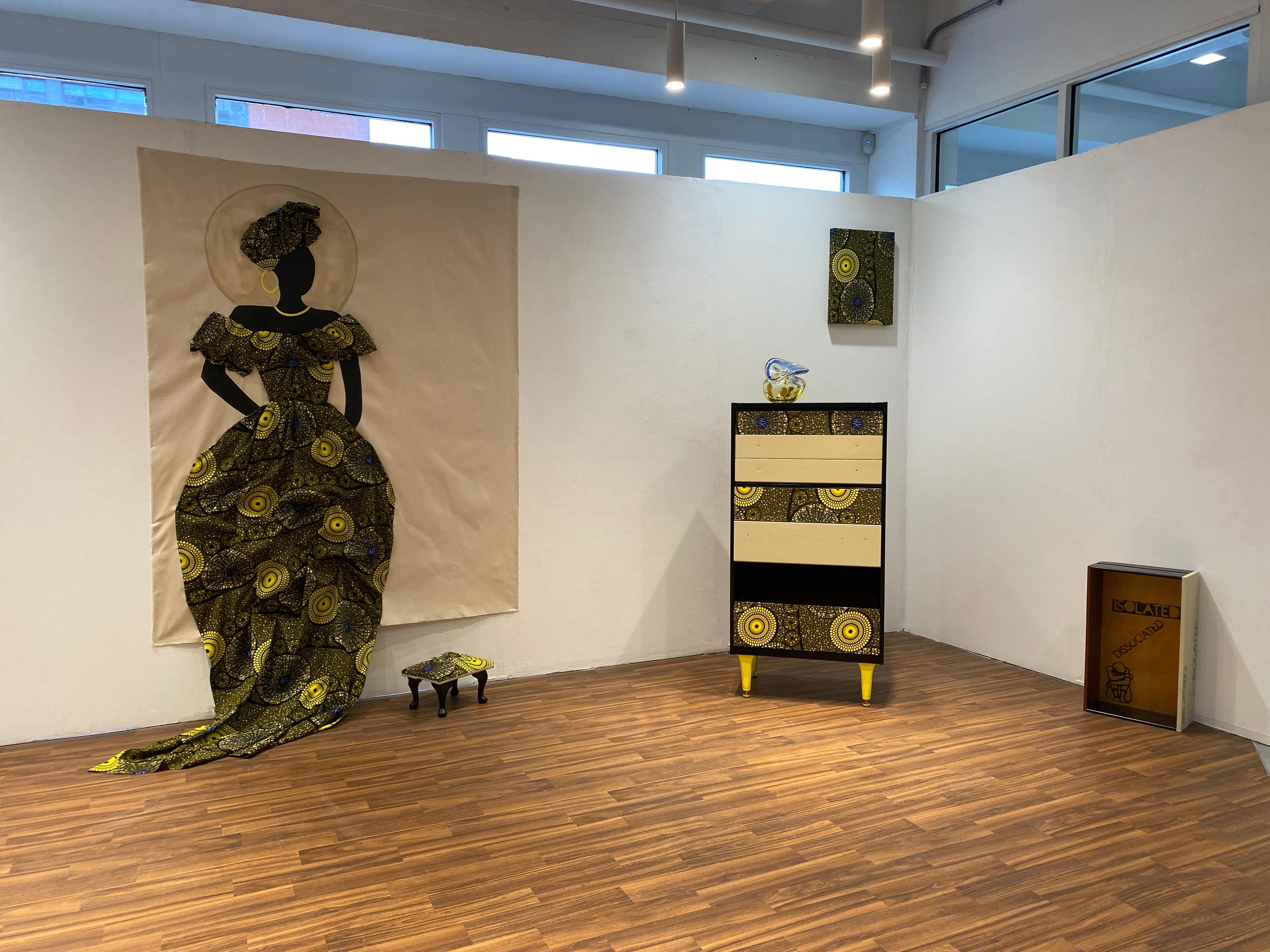
Unravelled Mind Threads of Dissociation, 2023. Shannel James
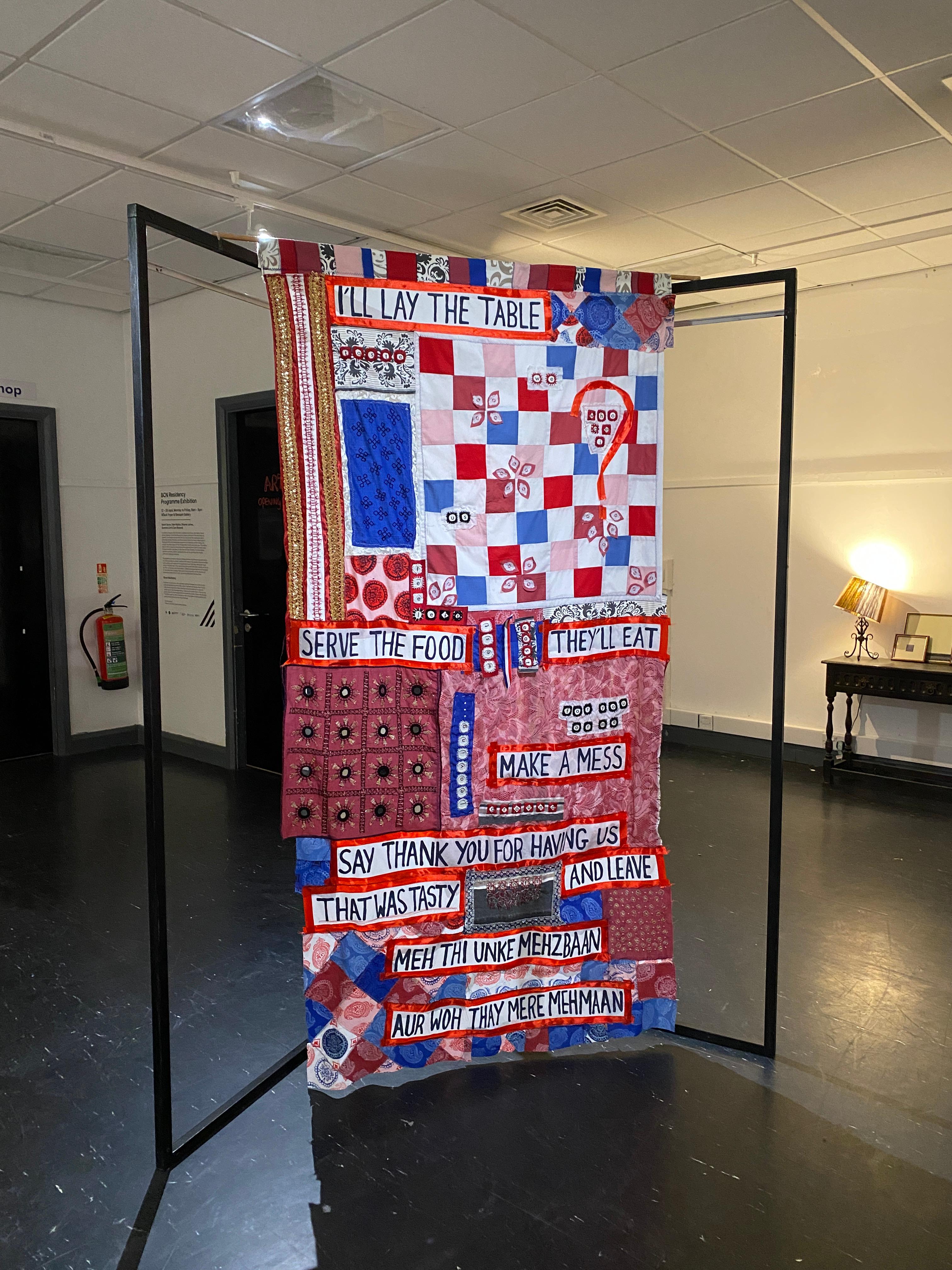
FEAST ON ME, 2023, Zara Masood.